

1. Can you introduce yourself?
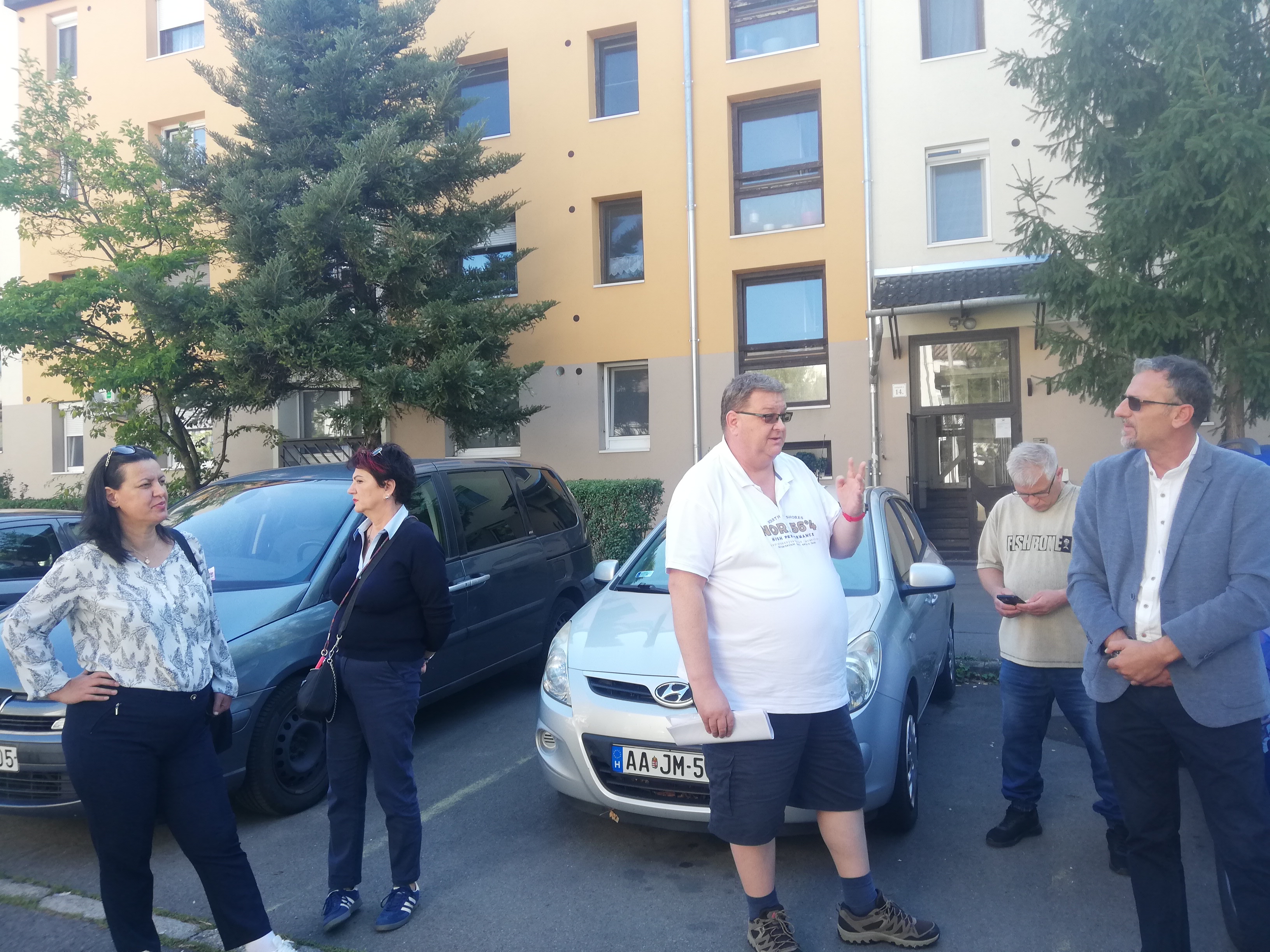
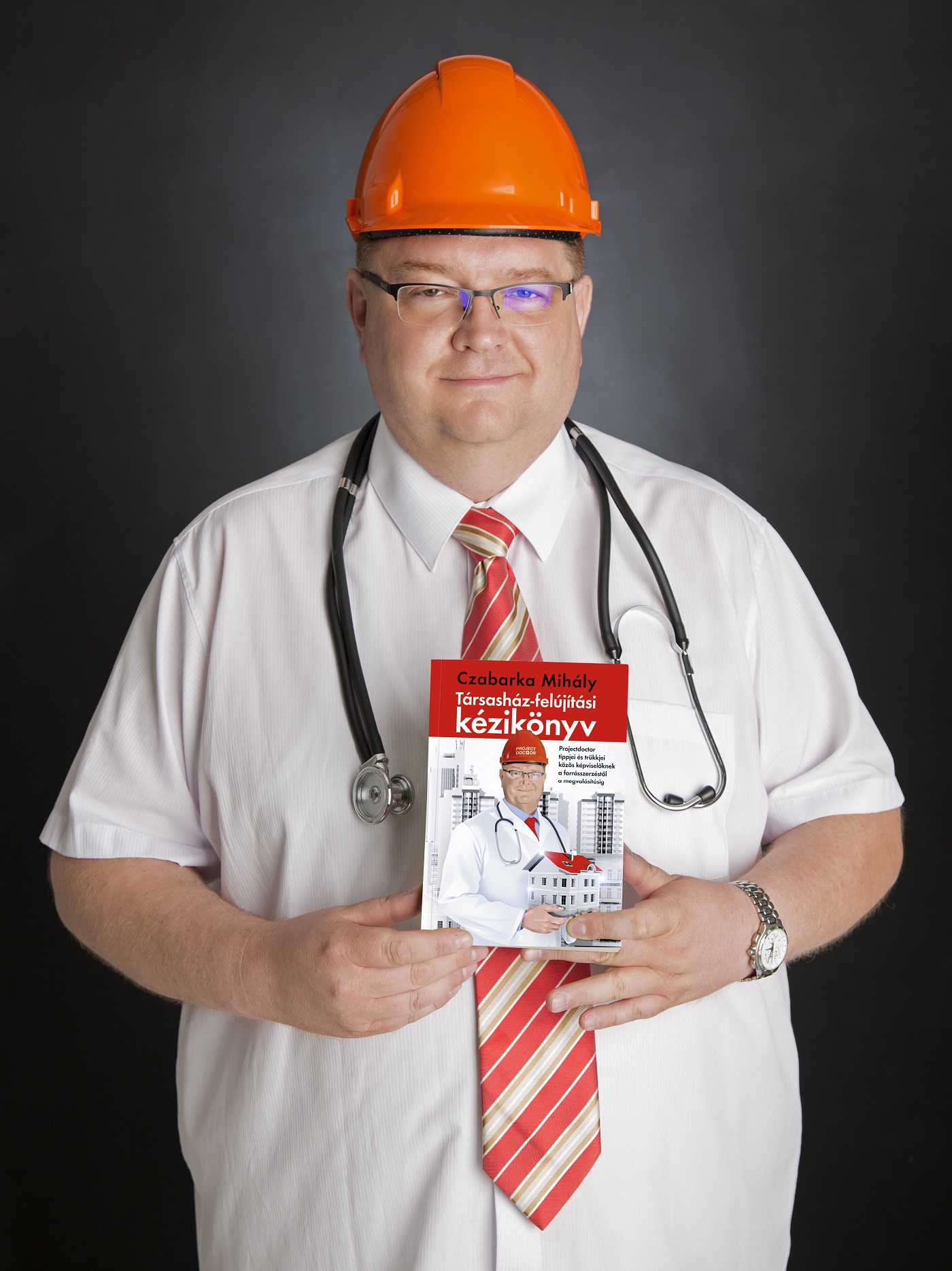
My name is Mihály Czabarka, I am the managing director and founder of ProjectDoctor Ltd. I work as a One-Stop Shop (OSS) provider, project manager, and mechanical technician for condominiums.
Between 1992 and 2020, I had been providing condominium property management services (initially as a side job). Later, I became the managing director of a property management company, where I was responsible for fifty condominiums. I also worked at a commercial bank, in the field of condominium financing, then at a regional development company, and I was building new condominiums. The professional network and expertise I had developed during these years proved to be valuable in the renovation of panel buildings later on.
Since 2001, when the Hungarian Panel Programme was launched, I have been working on the modernisation of condominiums: implementing energy renovations, planning, and project management through a single-person, one-stop service model. Over time, this became my full-time occupation. I do not undertake construction works, as it requires significant equipment, staff coordination, and the construction industry is highly cyclical.
I also conduct research related to condominium renovations and I publish articles and studies on these topics (for example, I was involved in a European LEAF project, RetrofitHub, and studies on ESCOs and Energy Performance Contracting). I participated in conferences and roadshows organized by Társasházi Háztartás journal, giving presentations to condominium communities on how to prepare for energy renovations.
2. Tell us more about your One-Stop Shop
I opened my OSS in 2001 and built my expertise in a market niche at a time when there was no professional literature on condominium renovation in Hungary. My mission is to reduce utility costs for condominiums. I am looking for innovative solutions - technical, financial, and organizational - in the field of condominium renovation. The business model has developed organically and is market-based. OSS advisors do not receive any state or municipal support. The condominium covers the costs of planning and project management. In certain cases, I work on a success fee basis. I seek a sustainable business model that remains financially viable in the long term, despite unpredictable subsidies and the stop-and-go dynamics of the renovation market.
I work with a permanent team of professionals, but they are not employed by me. The team includes sales representatives, technical assessors and designers (structural engineer, energy specialist, architect), a technical inspector, a handover coordinator, a tender writer, and an administrator. I personally handle negotiations with residents and condominium representatives.
3. Do the cities or regions where your One-Stop Shop operates support you?
Between 2016 and 2019, together with the Hungarian Association of Detached House Owners, we operated the Zugló Energy Efficiency Advisory Office (ZETI), which provided free renovation advice to residents and businesses in Zugló. At that time, the mayor of Zugló considered energy efficiency a priority and personally initiated the creation of the advisory office. It was a successful initiative, but his successor decided to shut it down, reallocating the shrinking financial resources to the renovation of municipal properties instead.
5. Can you give us some examples of the most challenging situations you had to face?
It is challenging to work with people from diverse backgrounds and to convince the majority of them to support a renovation process. Reaching an agreement among residents is difficult nowadays, as communities are highly divided. Residents often differ significantly: elderly vs. young; wealthier vs. low-income; those thinking long-term vs. those focused on daily survival; those aiming to preserve property value vs. those wanting to pay the lowest possible common costs; families vs. singles. One of the hardest experiences was in 2014 - 2015, when there was an attempted hostile takeover of my company. This involved tax audits and efforts to make operations impossible. Although the takeover attempt ultimately failed, I had to shut down my previous company. It is also difficult to adapt to the constantly and turbulently changing legal framework in energy, fire safety, condominium law, and administrative regulations. For instance, the project manager license was suspended for 12 years. The tightening energy efficiency regulations pose another challenge. In the case of major renovations (such as façade insulation), it is also mandatory to modernise the heating system, install ventilation, and replace windows and doors – all of which increase the cost of renovation.
6. You are on this journey for 25 years now, what were the key milestones for you and your One-Stop Shop?
In 2001, a state subsidy programme was launched for panel buildings, supporting energy renovations such as insulation, window and door replacement, and district heating modernisation. The financing model consisted of one-third state subsidy, one-third municipal funding, and one-third own contribution. During this period, I managed numerous building renovations using the OSS model, covering technical, financial, and administrative aspects. In 2008, the first energy regulation was introduced, bringing stricter rules. From 2009 to 2015, the last wave of the panel programme was implemented, during which most regulations were overhauled (energy efficiency, fire safety, etc.). In 2013, the government introduced a utility cost reduction policy, resulting in the lowest residential energy prices in the EU. This significantly extended the payback period of energy renovations – in some cases up to 35 years. In 2014-2015, I became the target of a hostile takeover. During this time, the tax authority harassed me, and one of my businesses was taken away. I was later exonerated, and since then I have kept a low profile and work with a small team. Since 2015, there has been no state support for condominium renovations. For the time being, we worked with ESCO and PPP financing models. Between 2016 and 2019, I co-managed the Zugló Energy Efficiency Advisory Office.
7. And what are your current ambitions?
Our goal is to convince as many condominiums as possible to carry out renovations, using innovative solutions, despite the difficult circumstances – such as the utility cost reduction scheme and the lack of state support for condominiums. It is incredibly rewarding to have a positive impact on people’s lives and to see the satisfaction on their faces at the end of a successful project. One of my professional highlights took place in the Hajdúság region, where I had to engage in lengthy discussions with the building’s representative, his wife, and even the mayor to convince them of the benefits of energy renovation. In the end, they recognised that I was acting in their best interest. At the completion of the renovation, they gave me a horsewhip – a symbolic gesture acknowledging the personal growth they experienced through the shared project. It is always a joy to take part in the community celebration at the end of a renovation – with cooking goulash together, variety shows, barbecues, homemade pastries, live music, and a real community-building festival atmosphere. Feedback is also important: one building manager initially believed he could afford a BMW from the commissions. That didn’t happen – but a few years later, he still recommended me to the neighboring building as their project manager.
8. Which regulations hinder your work today?
The general utility cost reduction scheme and the extremely low energy prices. Additionally, the difference in energy prices between businesses and households, as well as the different VAT rates for district heating, make it unfeasible to carry out heating modernisation through ESCO financing. Furthermore, energy regulations are very strict – especially the requirements related to major renovations.
9. Do you have any message for your peers or policy makers?
Municipalities should reinvest the energy savings they achieve on their own buildings into public advisory services and into one-stop shops. Moreover, they should build on the knowledge and experience of existing market-based OSS providers, as these actors are familiar with local challenges, conditions, and practical solutions. Existing OSS providers are embedded in market processes – without this, an OSS will not be viable. Additionally, it is extremely difficult to operate an OSS in the absence of (condominium) renovation subsidies. Given that municipalities operate in electoral cycles (every 4–5 years), it may not be ideal to entrust them with a long-term OSS operation. It would be more efficient if a bank established and operated the OSS, as banks can provide financial and technical advice in one place and already have a nationwide network. Advisory services could even be linked to the expiration of home saving accounts.
It is also crucial for renovation subsidies to reach municipalities and end-users directly, as the Hungarian state has diverted EU funds intended for building renovations over the past 10 years. For instance, subsidies meant for households were reallocated to public buildings; the Green Investment Scheme was converted into 0% interest loans, which were mostly used for installing solar panels; and the funds from the Norwegian Grants were rejected. Currently, EU funds are not flowing due to rule-of-law concerns, yet such resources are urgently needed to tackle energy poverty, support climate action, and improve energy efficiency.
A VAT refund after renovations (with photo documentation) would also be helpful – as new buildings benefit from a reduced 5% VAT rate, while renovation works are subject to the standard 27% VAT.
9. Would you like to say anything else?
It is worth organising a dedicated OSS community that supports condominium buildings, separate from the OSS structures targeting single-family homes. This distinction is important because condominium managers are often under-motivated. Within the EU Peers project and similar initiatives, it is advisable to explore business models that are financially sustainable in the long term. As construction prices continue to rise, it is advisable to carry out renovations as soon as possible. With the radical increase in property values, the investment cost represents a smaller proportion of the property’s total value - this can serve as a motivation. However, in Hungary, incomes have not kept up with the rise of property prices.

Discover why opening a One-Stop Shop for home energy renovation is your political win!
Join the EU Peers campaign and start building your One-Stop Shop now. Get inspiration and advice from more than 200 European One-Stop Shops and their supporters.

Related Articles


The EU Peers Advisory Board accepts the mission to strengthen the Integrated Home Renovation Services movement
.jpg)
Belgian-wide platform for practitioners launched!
Join a community dedicated to advancing residential energy renovation in Europe
Join a community dedicated to advancing residential energy renovation in Europe
Register in our collaboration hub to empower yourself, expand your knowledge, connect with other organisations, and scale up the IHRS sector.
