
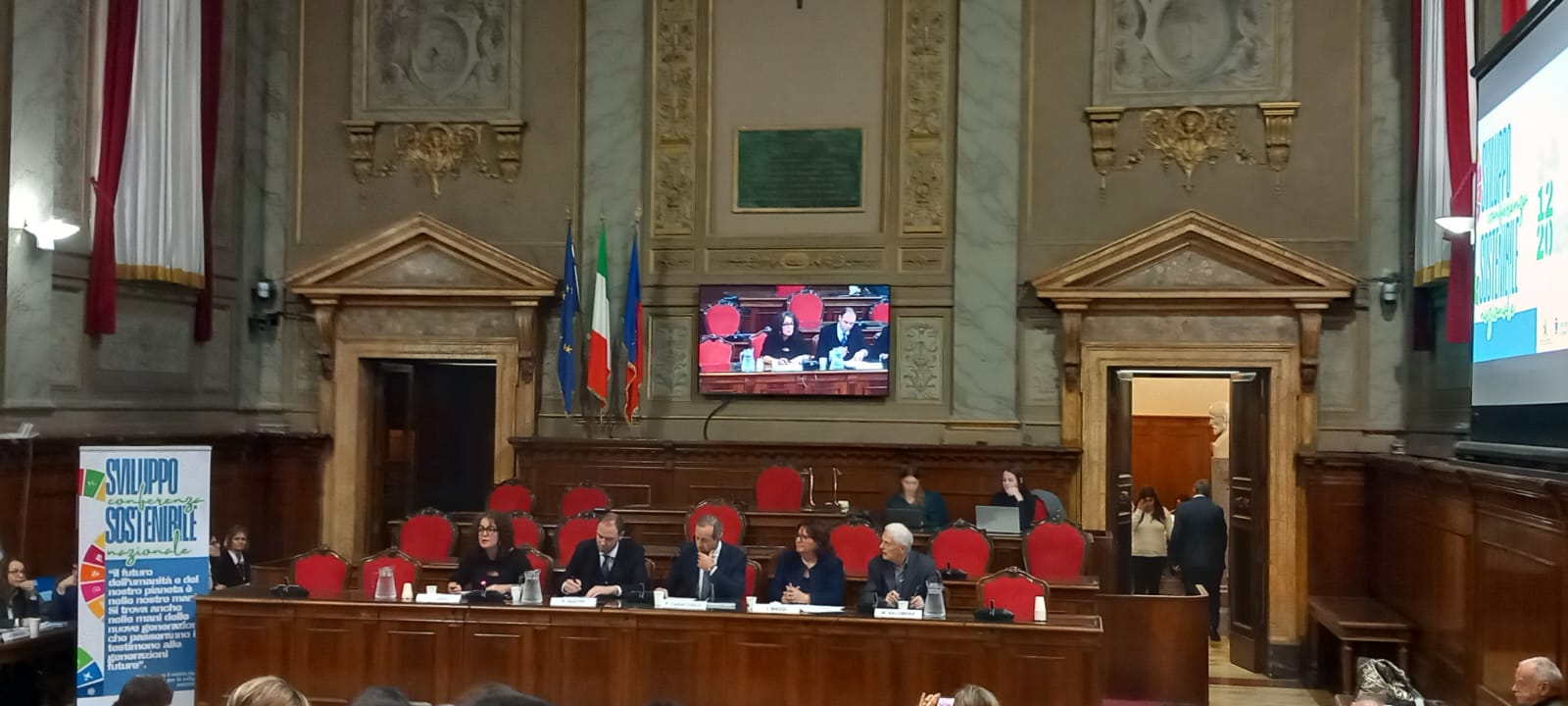
The Third National Conference on Sustainable Development, held in Rome from the 1st to 3rd of December 2025, offered a crucial platform for institutions, civil society, businesses, and research organisations to discuss the country’s progress toward the UN 2030 Agenda. Among the most active and engaging moments of the event was the thematic laboratory “Welfare energetico-climatico & Povertà energetica”, where the EU Peers project was presented as an innovative European initiative supporting local authorities and communities in accelerating the energy transition.
Addressing Energy Poverty Through Community-Driven Approaches
Energy poverty remains one of the most pressing social challenges linked to climate and welfare policies. During the session, participants highlighted how the transition to renewable energy must not only cut emissions but also strengthen social equity, ensuring that vulnerable households can access affordable, clean energy.
In this context, renewable energy communities (Comunità Energetiche Rinnovabili - CER) emerged as a central topic. Speakers emphasised the role of communities - such as those promoted by organisations like ènostra - in enabling citizens, small businesses, and local administrations to collectively produce, share, and consume renewable energy. CERs were presented not only as a technological instrument, but as a model of local democracy, social innovation, and collective empowerment capable of reducing energy bills and reinvesting value back into the community.
Data on the national rollout of CERs, drawn from ongoing monitoring activities, showed that regions across Italy are increasingly embracing collective self-consumption as part of the ecological transition. The model is now widely recognised as essential for tackling climate goals while ensuring fair access to benefits - including in areas most exposed to energy vulnerability.
Local Initiatives Combating Energy Poverty
The laboratory also explored concrete examples of local strategies to alleviate energy poverty. The “Roma Informa Energia” mobile service was cited as a best practice: a municipal initiative offering tailored energy advice to citizens, helping them reduce household energy consumption and improve access to support measures. These local actions demonstrate how municipalities can be front-line actors in building energy awareness and guiding residents toward sustainable solutions.
One-Stop Shops and the EPB Directive
Another central theme was the development of one-stop shops (OSS) for building renovation, increasingly relevant in light of the EU’s Energy Performance of Buildings Directive. These services aim to simplify the process for citizens by providing integrated technical, financial, and administrative assistance for energy retrofits.
It was stressed that OSSs represent a key tool for enabling large-scale renovation, especially for low-income households that often lack access to information or resources. Improved coordination between national ministries, regions, and agencies - such as the MASE, GSE, and local administrations - is crucial to ensure that these services are effective, accessible, and consistent across territories.
EU Peers: Building a European Community of Practice
In this landscape, the EU Peers project was presented as a strategic initiative supporting municipalities and local actors in deploying community energy and building-related services. EU Peers aims to create a pan-European community of practice, enabling cities and regions to:
- exchange knowledge and technical expertise,
- improve the quality and impact of energy-related services,
- access tools, guidance, and capacity-building opportunities,
- support citizens and vulnerable households in the transition.
The presentation underlined the importance of strengthening cooperation among local authorities, ensuring that the lessons learned from European frontrunners can be shared effectively across regions. The project’s service offerings - including peer-to-peer support, training pathways, and tailored advisory tools - were showcased as essential resources for administrations working to integrate social and climate policies.
Towards a Fair and Inclusive Energy Transition
The laboratory closed with a shared understanding: the energy transition cannot succeed without strong social policies that address inequality and ensure that the benefits of decarbonisation reach everyone.
Projects such as EU Peers, together with the expansion of CERs, innovative municipal services, and the development of one-stop shops, represent crucial components of a fair, community-centred, and sustainable transformation of Italy’s energy system.
The Third National Conference reaffirmed that achieving the SDGs requires not only technological progress but also collaboration, participation, and empowered local communities. EU Peers stands as a concrete example of how European cooperation can support this ambition - helping cities and citizens work together toward a more equitable, resilient, and climate-aligned future.

Related Articles

EU Peers Summit#2 2025: Powering the Future of One-Stop Shops in Europe
EU Peers Mentoring Programme: Taking One-Stop Shops to the Next Level
.jpg)
5th Meeting of the EU Peers Spain Community on Business Models
Empower yourself by becoming a member of EU Peers Community of Practice!
Empower yourself by becoming a member of EU Peers Community of Practice!
Expand your knowledge, connect with other organisations, and scale up the sector of IHRS by joining the vibrant and evergrowing Community of Practice
