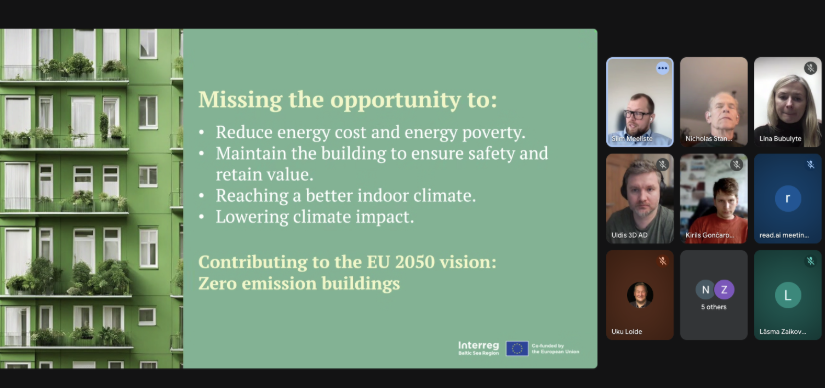
At a recent cross-country online meeting, participants from Latvia, Lithuania, Estonia, and other EU partners explored the challenges of permit approval processes and the importance of collaboration to improve administrative efficiency. The discussion highlighted real-world examples from Riga, where permit requests often take months and involve multiple departments, emphasizing the value of cross-border learning and coordinated action.
The meeting focused on the administrative hurdles that municipalities and agencies face in managing permit requests, particularly in Riga. Applications often move between the legal and construction departments, causing delays and sometimes conflicting responses.
Lina Bubulyte from “Atnaujinkime miestą” shared insights from Lithuania, where the permit process has been streamlined through structured digital tools and improved coordination. She provided a link to the pilot digital tool used in Vilnius, which allows building surveys to be conducted on-site, automatically generating reports and scores: OSS guide.
Nicholas Stancioff highlighted the practical value of sharing such experiences:
“That’s why I want that link – so I can say, look what they’re doing in Lithuania.”
Siim Meeliste, representing the RenoWave project, and Kadri Kallast contributed examples from Estonia, where Credex has demonstrated how coordinated guidance and technical support can simplify renovation and permitting processes. Their experiences underlined that cross-border knowledge exchange is vital for identifying practical solutions and supporting collaboration between national and local authorities.
The discussion also touched on broader lessons from engagement with homeowners and municipalities. Participants agreed that fostering communication and cooperation between local authorities, technical experts, and citizens is essential to navigate administrative barriers effectively.
Beyond technical insights, the meeting offered participants a chance to reconnect professionally and personally. Attendees appreciated the opportunity to exchange experiences, discuss challenges, and strengthen networks that advance the shared goals of administrative efficiency and sustainable renovation practices.
The meeting concluded on a positive note, with participants reaffirming their commitment to mutual learning and cooperation. While administrative challenges remain, open dialogue, knowledge sharing, and collaborative approaches across borders are key to overcoming them.
As Nicholas Stancioff summarised:
“There’s a lot of work still to do, but that’s why it’s important to work together.”

Related Articles
.png)

EU Peers Capacity Building Webinar: Strengthening OSS & IHRS to Tackle Energy Poverty
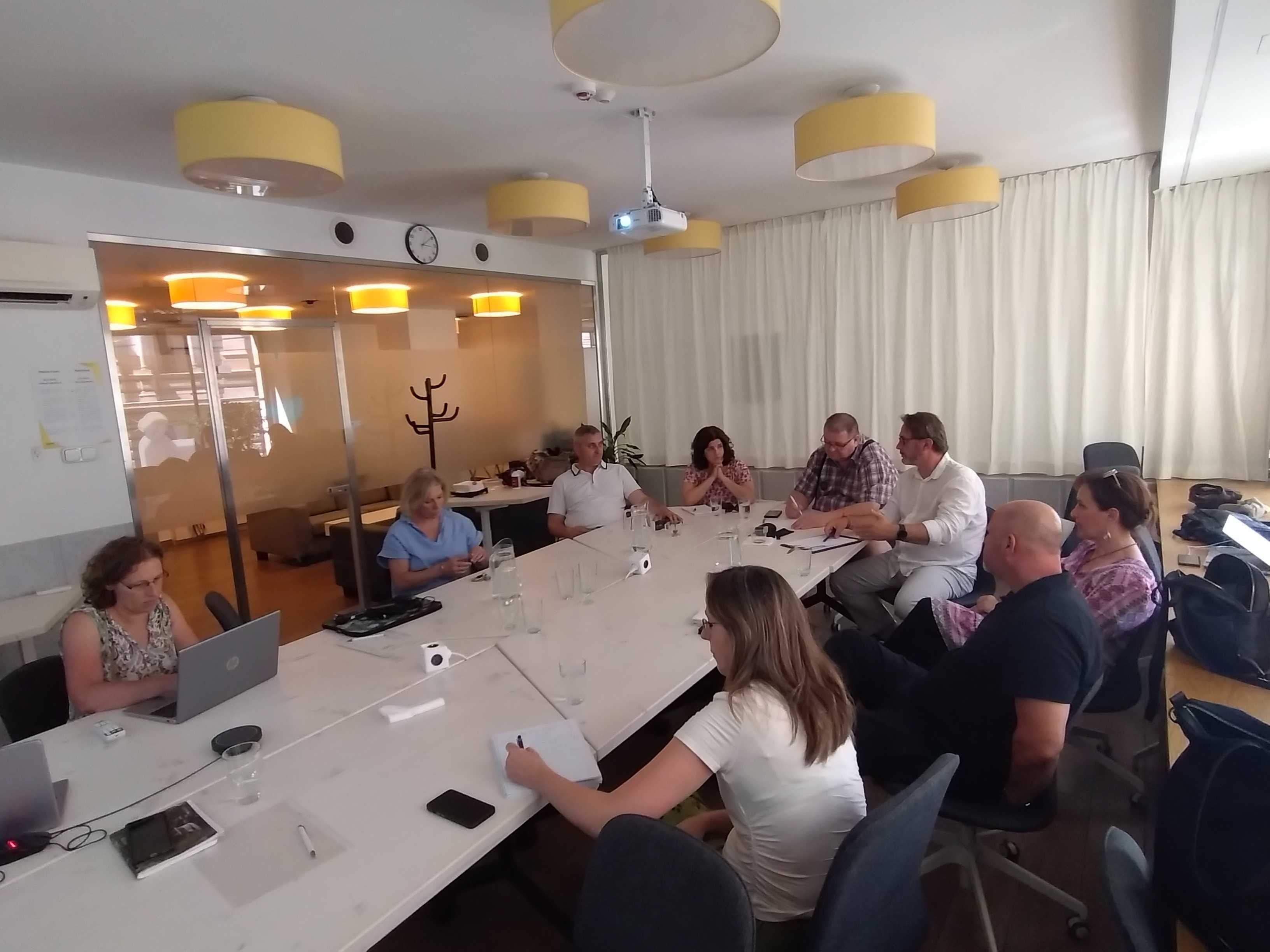
10th Meeting of the Hungarian EU Peers Community: Proposals for the Nationwide Expansion of OSS
Join a community dedicated to advancing residential energy renovation in Europe
Join a community dedicated to advancing residential energy renovation in Europe
Register in our collaboration hub to empower yourself, expand your knowledge, connect with other organisations, and scale up the IHRS sector.