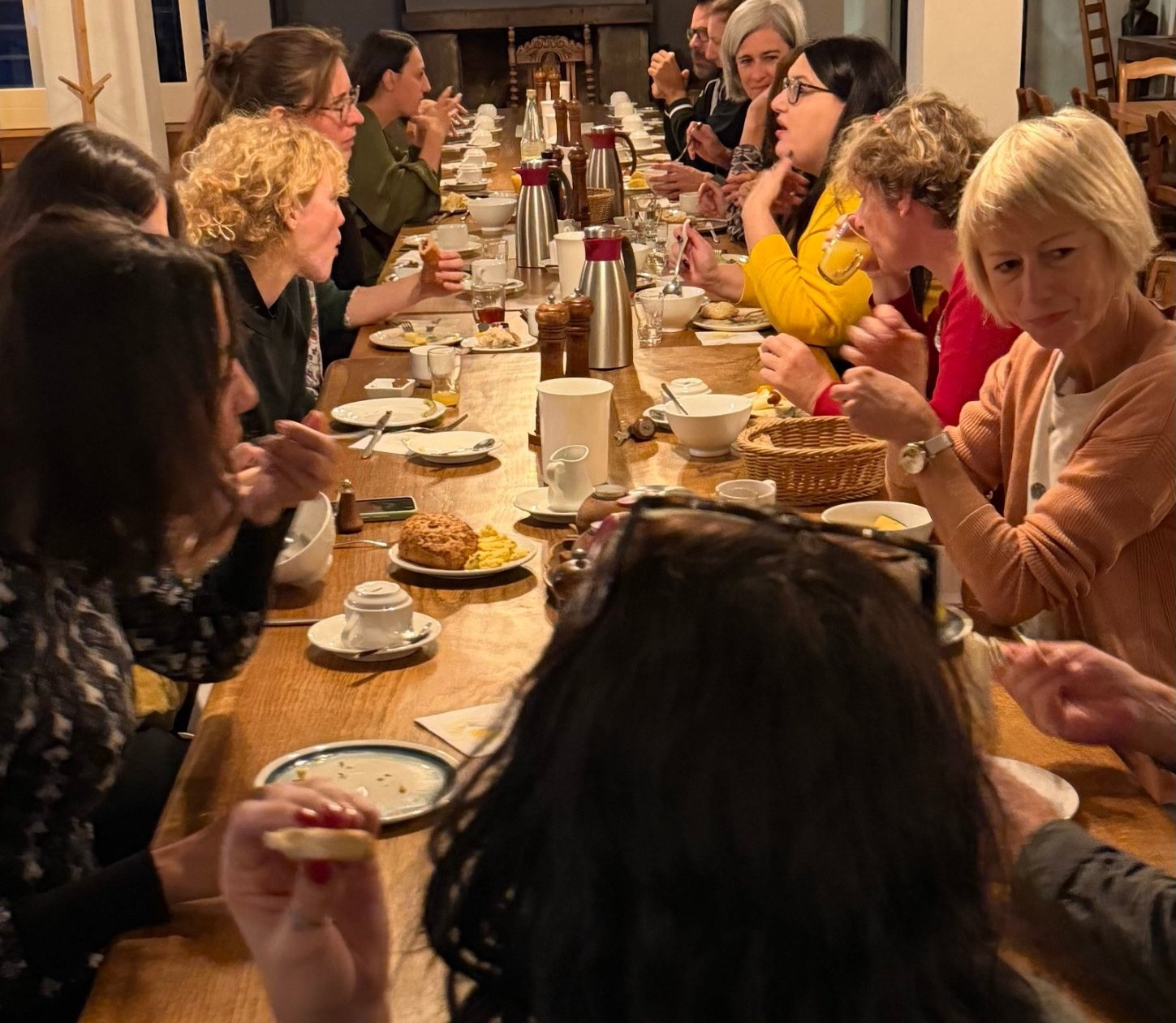
Our third project meeting, held in Rome, coincided with the first birthday of EU Peers, which was a good opportunity for the consortium to look back and assess what we have implemented so far. We also planned the year ahead.
The first year - in which a lot happened behind the scenes until the kick-off in July 2024 - was incredibly full and rich! Here are just a few key points of our retrospective:
EU Peers
- developed a Community charter
- launched its website as a reference point for IHRS providers and their supporters
- organised the first EU Peers summit in Brussels and launched the Community officially, which now has almost 150 members!
- partnered with many great institutions, including our ‘sister projects’
- presented the Community initiative on numerous occasions, such as Concerted Action EED, Covenant of Mayors Investment Forum, and a number of project conferences
- held > 12 national and transnational meetings for the EU Peers Community
- initiated a mapping of the European IHRS scene using an online survey
- established an advisory board, which held its first meeting in September 2024
- launched the Community intranet ‘Humhub’ (also with more than 100 individuals already)
During our third project meeting, we also took a - sometimes critical - look at the status quo and the need for improvement:
- There is a good team spirit among the project partners and the support from CINEA is highly appreciated
- We will emphasise the benefits of membership for potential members of the community even more clearly.
- While the process of becoming a member is going relatively smoothly, we want to streamline communication and, above all, strengthen community participation!

Furthermore, we worked on the tasks that lie ahead in the second year.
EU Peers
- just now published a collection of success cases of OSS and other IHRS providers!
- already launched a knowledge hub
- but will also compile national knowledge repositories
- is excited to start a capacity building series and tailor-made mentoring for members!
- continue to offer national and transnational meetings for the Community
- analyse and publish the results of our mapping of the IHRS landscape
- organise the next summit in Brussels in Spring 2025

We would also like to support the formation of further national platforms - beyond the consortium, but with our active assistance! As you see, there is a lot in the pipeline and we are very much looking forward to intensive work, often together with you, in the second year of EU Peers.
PS: When in Rome, of course we also tried to behave like Romans. With this in mind, the consortium was guided by ENEA to take part in a wonderful pasta cooking masterclass as a team!


Related Articles

Driving Sustainable Housing Solutions by EAP
Monitoring the impact of OSS
Seventh meeting of the Hungarian EU Peers community
Join a community dedicated to advancing residential energy renovation in Europe
Join a community dedicated to advancing residential energy renovation in Europe
Register in our collaboration hub to empower yourself, expand your knowledge, connect with other organisations, and scale up the IHRS sector.