
Could be the conclusion of your meeting, the most important results – keep it short.
Selecting reliable contractors
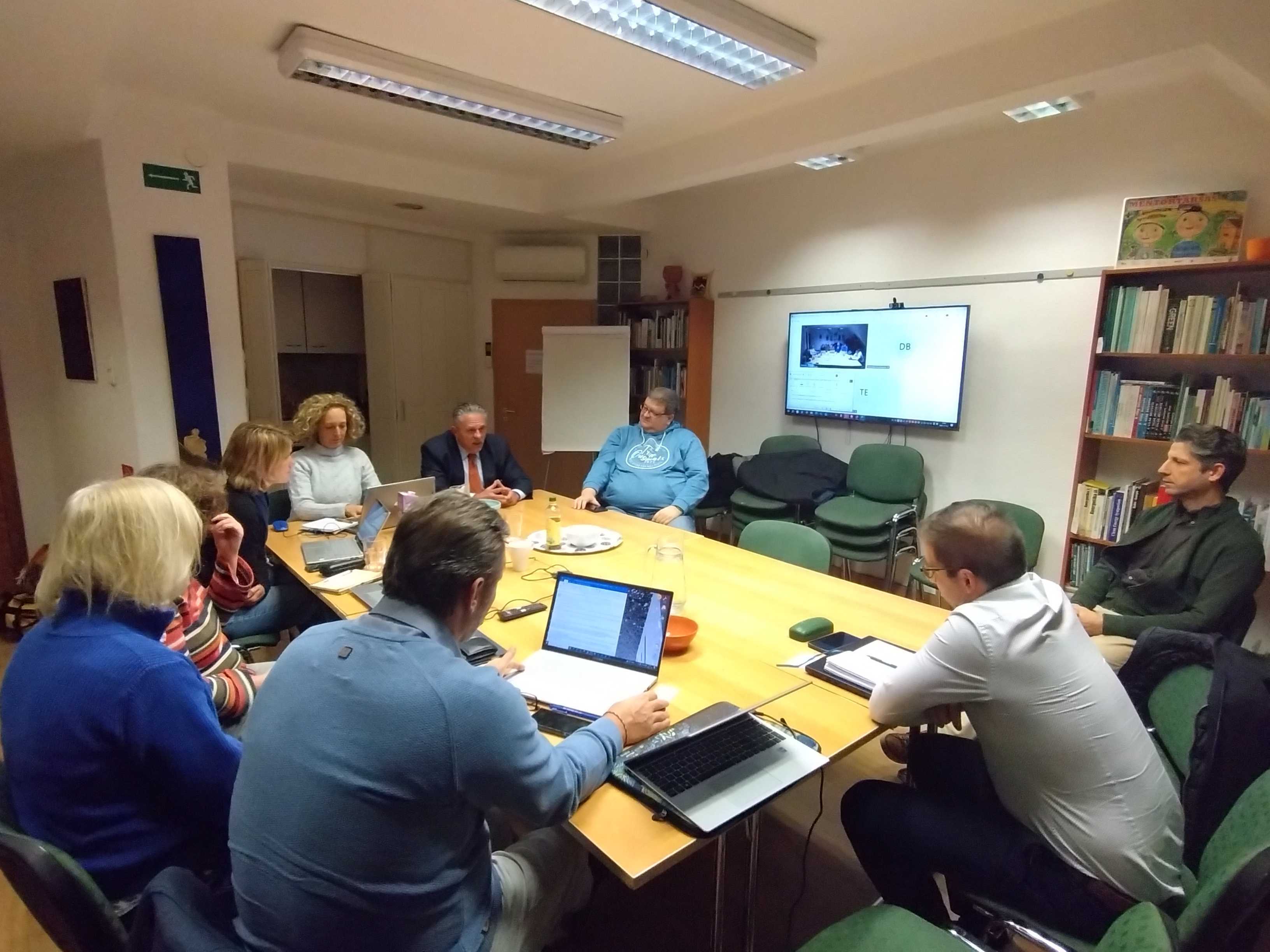
On one hand, for a long time an important topic has been among one-stop shops is how to find reliable subcontractors, and on the other hand, how they can prove to renovators that they are fair, high-quality companies with whom the renovation process is safe. These points were raised by the "Nyugodt Építkezés" Information System, which has been assessing construction companies and investigating complaints related to them for more than 20 years. Its founder and director, Zsolt Flórián, gave a detailed presentation to the EU Peers members on the Nyugodt Építkezés System's qualification method: how it differs from other companies’ systems, why it is worth for a company to request certification, and what guarantees are in place to filter out bad-quality companies. He also presented his new development, where companies can be searched based on references, which not only helps renovators learn whether a given company is reliable or not, but also makes it easier to find suitable specialists in their area.
Some of the EU Peers members are already using this system, but there were also members who were not familiar with this certification system. They discussed and raised questions about what this system can be used for and how the service could be potentially further developed.
Budapest Green Panel Programme - waiting for launch
Multi-apartment building one-stop shop advisors were primarily interested in developments related to the new Budapest condominium support scheme. Balázs Nattán, an expert from the Budapest Public Utilities (BKM), the implementing body, explained the current state of the Budapest Green Panel Building Programme. According to the previous plans, 30% non-refundable support, 10% own contribution, and 60% condominium loan will cover the costs, following the “1+1 Ft” principle between the capital and the districts. At least 30% energy savings must be achieved through insulation, window replacement, heating modernisation and solar panel installation. A novelty compared to previous plans is that the Decision Preparation Document (DEA), which includes energy assessment, proposed renovation measures, and the non-priced budget, will be prepared by BKM. Approximately twice as many condominiums will be able to have the DEA prepared as those that will eventually be able to carry out the renovation. BKM will manage the tender, providing model contracts and other guidance to support building managers, but they will not recommend reliable contractors. In the evaluation of applications, additional points will be awarded if the applicant community recently connects to the district heating system.
At the end of his presentation, Balázs Nattán presented the planned schedule of the call. Out of the 12 districts that have applied, so far 1–2 districts are expected to sign a contract with BKM before the end of the year - so in these districts the programme can start already in 2025; while in the other districts the call will be announced in the spring–summer of 2026.
Conclusion/Ending
Further plans
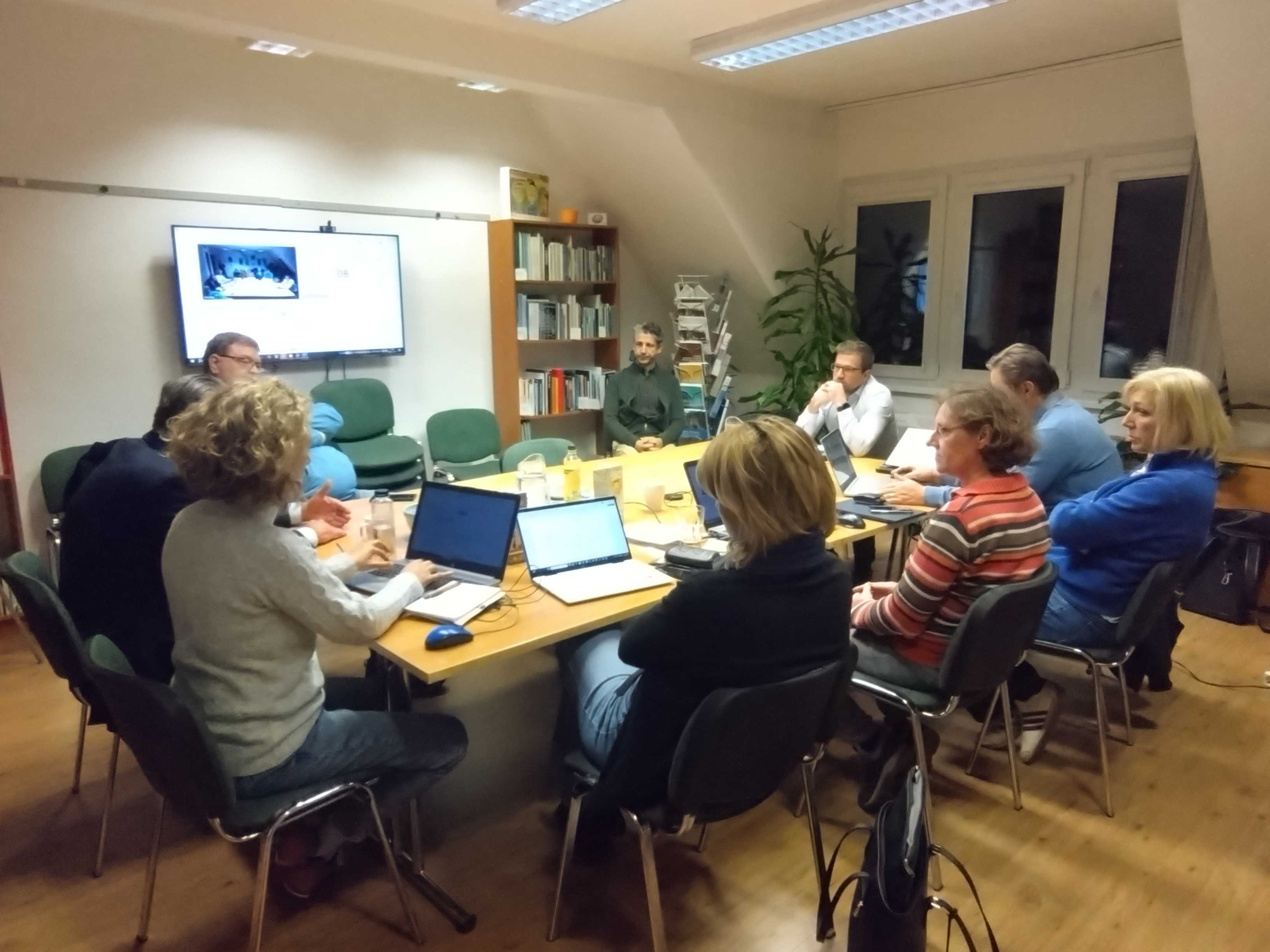
Project manager Ilona Illésné Szécsi presented the plans of the EU Peers project for the upcoming months. The municipal campaign has started during which arguments have been collected for local decision-makers on why it is beneficial and worthwhile to launch and operate a one-stop shop advisory service. Additionally, as part of the EU Peers mentoring programme, a 1.5-day training will be organised for interested municipalities on OSS models, EU expectations, good practices, and, through group work - participants will have the opportunity to develop an OSS model for their own municipality. Advocacy related to OSS advisory services will become particularly important in the next few months: several construction sector roundtables will be organised, where construction companies, financial institutions, research institutes, municipalities, national decision-makers, and civil organisations will discuss what kind of one-stop shop advisory network should be operated in Hungary. The joint position will then be presented to as many decision-makers as possible within the framework of a policy roundtable.
Since the international EU Peers consortium members held their project meeting in Budapest, members of the Hungarian community had the opportunity to meet and talk to them in person after the community gathering.

Related Articles

EU Peers at the Assises Européennes de la Transition Énergétique in Strasbourg
Empower yourself by becoming a member of EU Peers Community of Practice!
Empower yourself by becoming a member of EU Peers Community of Practice!
Expand your knowledge, connect with other organisations, and scale up the sector of IHRS by joining the vibrant and evergrowing Community of Practice
