
One insight emerging from the World Café at the 2nd EU Peers Summit is clear: to reach new, low-income home-buyers, One-Stop Shops (OSS) must engage them before purchase, through trusted local networks and accessible, aspiration-driven communication, ideally linking renovation advice with finance. This conclusion matters because Europe’s renovation support landscape tends to address homeowners after they have bought or lived in inefficient buildings—by which time both motivation and means are often constrained. By reframing engagement as an early, trust-based process integrated with lending and community channels, the discussion highlights a fresh pathway for tackling energy poverty at its source. This perspective—also embodied in the LIFE-funded LEG-UP project—offers a practice-driven blueprint for aligning social inclusion, renovation finance and climate goals.
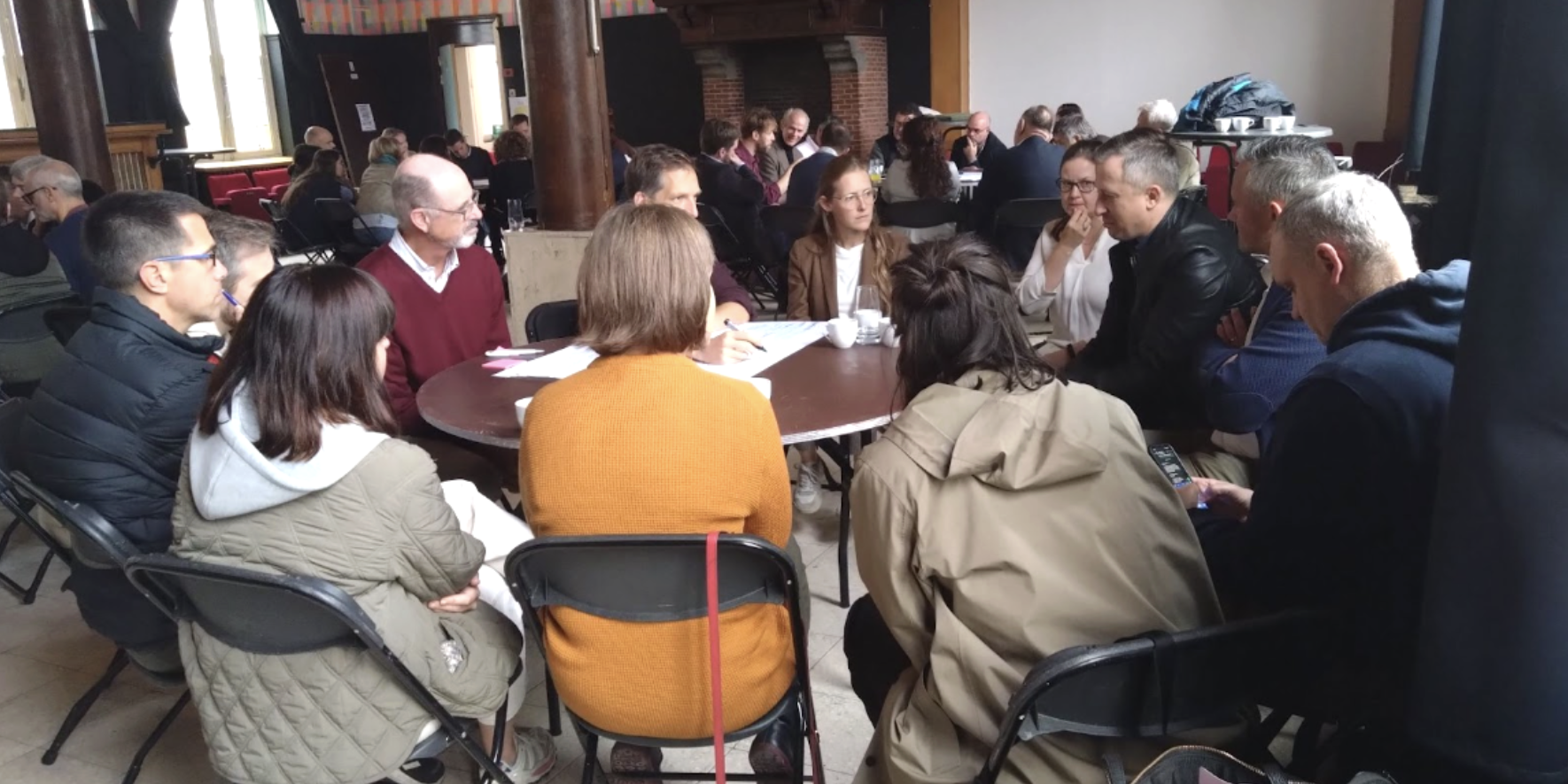
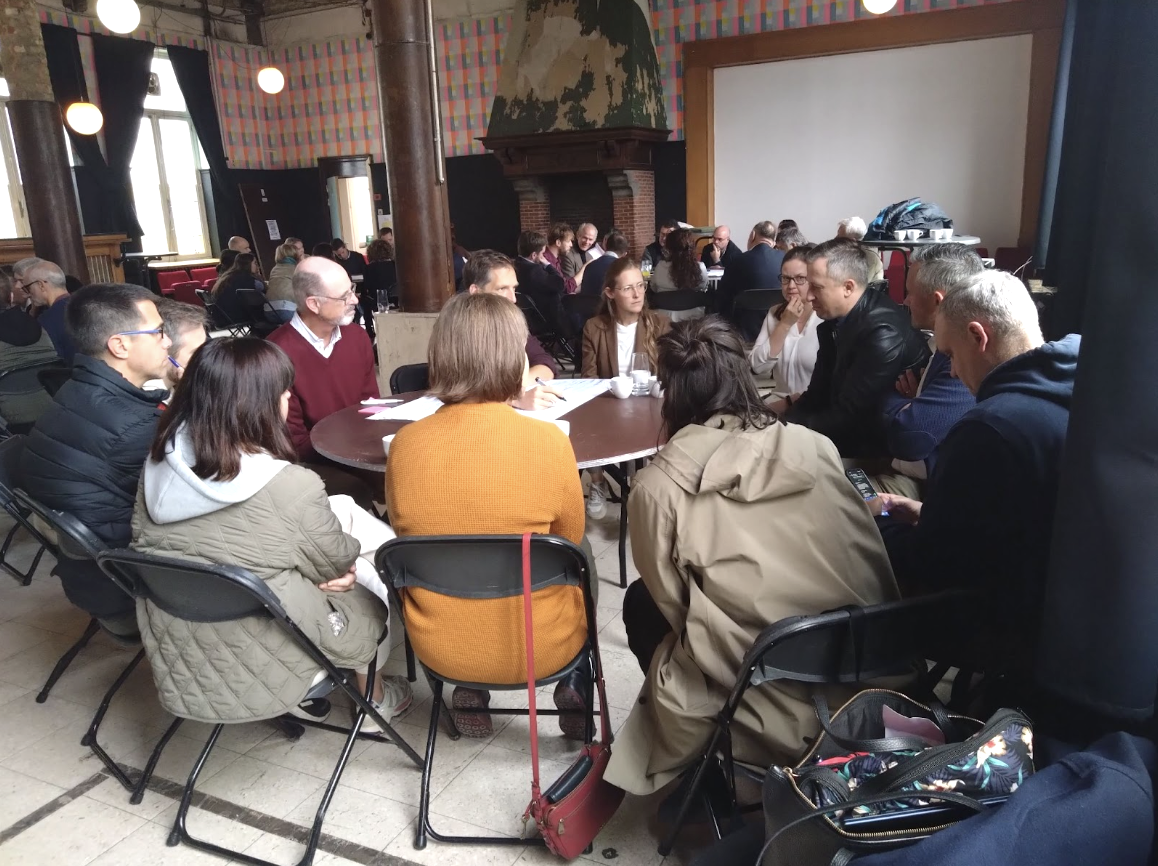
A large hall in Brussels, October 2025: The room is slightly cool, but the atmosphere is warm and alive — a hum of conversations everywhere as more than 60 One-Stop Shop (OSS) practitioners convene around five round tables. We are in the midst of the World Café session during the 2nd EU Peers Summit: “Deep dive into the practical challenges of OSS”. And while the contexts of the participants from across Europe differ, their experiences are equally striking.
At our table, our Belgian partner Joris Piette (Onesto) posed the guiding question. As an OSS: “How to engage new (low‑income) homebuyers?” The phrasing already hints at two dimensions: timing (new buyers) and target group (lower-income). Let’s unpack what emerged.
1. General approach
- Timing matters
The group was nearly unanimous: reaching people before they purchase a home gives more traction. But how to catch them at that moment? - Who are “low-income” homebuyers?
We debated whether low‑income households buy homes (or rather inherit?). Joris clarified: yes — the twist is that many such buyers end up purchasing older, energy-inefficient homes, trapped in cycles of high energy bills and constrained renovation capacity. The challenge is precisely to prevent or mitigate energy poverty in these cases. - Cooperation
As Christophe Milin from CINEA emphasised again at the Summit, OSS don’t operate in isolation — they build ecosystems around renovation. For our question at hand, that might mean engaging notaries, real estate agents/platforms, banks, homeowner associations, and/or other federations.
A Belgian OSS reported that some notaries and brokers welcome the idea of OSS support, presenting it as an extension of their service, enhancing their client offering. Others, wary of complicating the sale process, avoid mentioning renovations altogether. Yet in Belgium, another OSS shared a success story: they regularly cooperate with real estate agents on properties that are hard to sell in their conditions. The OSS provides a renovation cost estimate, which helped bridge the gap for buyer and seller discussions.
In our discussions on bank cooperation, the emergence of the French/European renovation bank through the EU Peers partner Filao Labs was mentioned, which might offer dedicated finance to accompany renovation projects.
- Communication, marketing and positioning
One memorable suggestion came from Bulgaria: market the OSS like a “used-car inspection agency.” “Come to us — we’ll help you assess your prospective car/home.” In Croatia, DOOR reported success through mass media outreach, notably exposure via the “Good Morning Croatia” radio show. Joris distilled his distinct marketing takeaway: advertise not with fear, but with aspiration — “We help you live better in the future.”
2. Focus on low-income buyers
When we shift the lens even more toward lower-income households, new themes surfaced:
- Trust first
These households may feel stigmatised, vulnerable, isolated (especially seniors). Dignified and respectful contact is non-negotiable. - Cooperation
Several models emerged:
- Social support agencies: In Ireland, EcoVision has good experience reaching energy-poor households through these agencies.
- Faith-based institutions: In Bulgaria, Caritas or Red Cross play trusted local roles.
- Schools: A Belgian participant noted that they can act as good gateways.
- Local institutions: “Go where people already go” — e.g. place OSS stands in post offices, where pensioners collect their mail/pension in Bulgaria and stay on for a chat.
- Financial institutions, e.g. credit unions: With proper training (as noted by People Powered Retrofit UK), they can become advice anchors — but without caution this route might risk further promoting debt.
- Process design and incremental packages
From Ireland, a participant recounted pilots where very modest interventions (≈ €300) addressed mold, small insulation fixes, or ventilation tweaks. These are not glamour works, but manageable entry points. Tailored small-package renovations often perform better and get the process going. The consensus: where possible, a face-to-face, consistent 1:1 process works best. - Messaging: stigma vs acknowledgment
Some argued that acknowledging the reality of poverty openly is honest and might reduce alienation (notably voices from HR and IE), “not shielding people from their own reality”. Others cautioned that upfront messaging risked stigma and deterrence (“Don’t signal me as poor!” — expressed by participants from BG, DE, ES). Likely, approaches must be culturally sensitive and locally tested. All agreed on using an empowering, non-intrusive, appreciative approach — enabling people to own the process.
3. Tentative takeaways
Here are some reflections and ideas drawn from these discussions:
The earlier you engage someone in their home-buying journey, the better your leverage. That means cultivating referral channels with estate agents, notaries, mortgage advisors, social housing agencies, and/or local authorities. Ideally, the OSS embeds itself in the decision pathway, not merely as an adviser after purchase. For lower-income households, the approach should prioritise dignity, consistency, and human connection. Cold, online-only outreach may miss the mark. Hybrid approaches (online + local face-to-face outreach) anchored via trusted local intermediaries could work. Big renovations can intimidate or financially exclude. Offering “starter bundles” (e.g. mould removal, draught sealing, basic ventilation) can build confidence and credibility. Also, let’s position OSS support as aspirational (“better living,” “healthy homes,” “future savings”), not remedial. “We help you see/realise potential” rather than “you have a problem.” Nothing will succeed without smart, risk-managed finance models. That means de-risking renovation lending, blending grants with loans, guaranteeing portfolios, and embedding renovation costs into purchase financing where possible.
These reflections also point to where LEG-UP brings new momentum. The LIFE-funded project, coordinated by Onesto, moves beyond a fragmented OSS model toward a scalable financial and advisory ecosystem that meets homebuyers where they are — before purchase, with dignity, and with a clear pathway to renovation already built in. At the core lies a blended finance model that connects affordable lending with OSS support, allowing renovation costs to be included in the purchase loan. The OSS acts as the bridge between household, renovation plan and financing, turning separate steps into one coherent journey toward comfortable living.
In sum: Thank you, Joris, for your question! And thank you all for helping to answer it! And if you’re curious to learn more: Come join us on 11 December at the next transnational meeting to exchange on practices that help reaching new (low-income) home-owners.

PS: If you are interested to learn more about the background for Joris’ question, have a look at the LEG-UP project (Linking Energy-efficient Green Upgrades with Private Investments). LIFE-funded and coordinated by Onesto, LEG-UP aims squarely at the challenge of enabling low‑income first-time buyers to purchase and renovate inefficient homes. It does so by linking affordable finance with the practical guidance of One-Stop Shops, creating a seamless bridge between advice, renovation planning and lending (https://www.onesto.vlaanderen/nl/leg-up). But it is also clear that this question is of concern to many of us, as it was recently chosen as the topic for the next EU Peers transnational meeting on 11 December!

Related Articles

EU Peers Capacity Building Webinar: Strengthening OSS & IHRS to Tackle Energy Poverty

.jpg)
Empower yourself by becoming a member of EU Peers Community of Practice!
Empower yourself by becoming a member of EU Peers Community of Practice!
Expand your knowledge, connect with other organisations, and scale up the sector of IHRS by joining the vibrant and evergrowing Community of Practice
