

“The idea to set up a One-Stop Shop came from the civil society activists who asked the city council to act.”
Interview with Corentin Girard, Energy Area Coordinator, Valencia Climate and Energy Foundation
About the initiative
- Can you introduce yourself?
I’m Corentin Girard. Since 2016, I have been working as Energy Area Coordinator for Valencia Climate and Energy Foundation of Valencia City Council. I was in charge of designing and opening the first three municipal energy offices in Valencia and I am supervising the One-Stop Shop (OSS) service. My background is in environmental engineering and I have experience in consulting for NGOs, public entities and academia.
- What is the city of Valencia doing to facilitate home energy renovations?
Valencia, Spain, is geographically located on the Mediterranean coast and it is one of Spain’s largest cities. The city has a population of more than 800,000 inhabitants, with the metropolitan area exceeding 1.6 million inhabitants. Our local objective is to become climate neutral by 2030 while reducing energy poverty affecting currently one out of five households in the city.
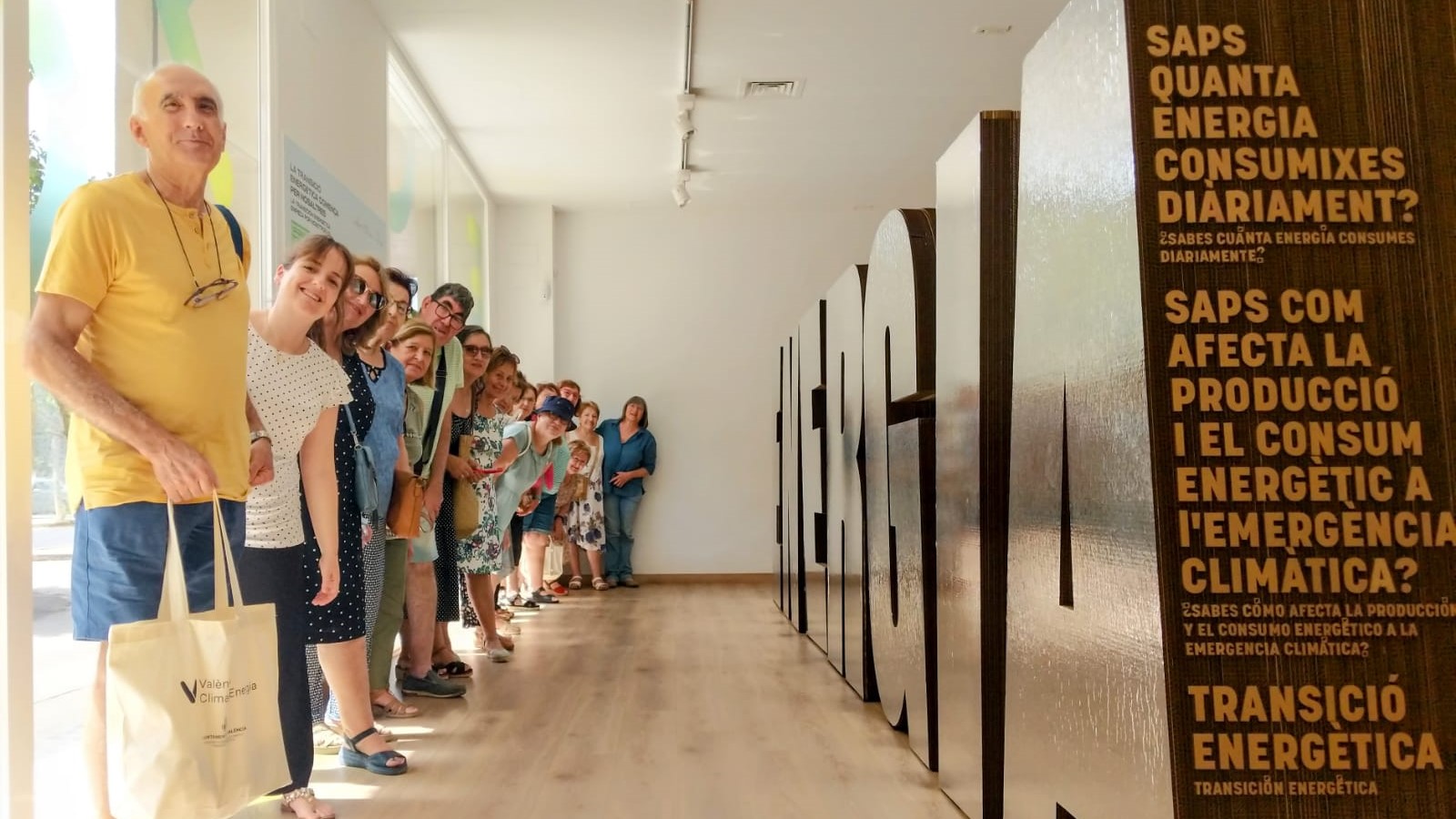
In 2019, Valencia Climate and Energy Foundation created three physical and one mobile municipal energy offices to promote sustainable energy policies and to assist citizens with their energy renovation projects and the set-up of energy communities. Our goal is to convert the existing information and training service into a fully operating integrated home renovation service. We also provide discount on local taxes for PV installation, review urban planning documents to facilitate renovation projects, organise information and awareness raising campaigns and support project owners in submitting grant applications.
The city council supported and financed the OSS since its beginning, with continuous political commitment independently of local changes. When it comes to the communication with homeowners, the involvement of the city council gives the OSS a clear advantage in terms of credibility and trust. We promote public, independent and free energy advisory services. The users acknowledge it, they know we are not selling anything. This privileged relation with the city council also facilitates procedures related to permits and licensing and other administrative procedures.
- Can you briefly present your One-Stop Shop?
For now, our OSS is structured around five working areas: Energy Bills, Right to Energy, Cultural Transition, Savings and Renovation, Renewable Energy. The OSS is financed 100% by the city council through the Valencia Climate and Energy Foundation. We have some extra budget from EU or national projects. The service is currently partially externalized through a service contract with a private company. The core team is made of 13 FTE working in the office (engineers, architects, social workers, education professionals) and 4 FTE working from the Foundation on the coordination and support activities.
- One-Stop Shop creation is a long journey, can you tell us how it went?
In our local Spanish context, where the complexity and opacity of the energy sector was frightening and energy poverty rising, the energy centres were created to fight “energy illiteracy“. Citizens hardly understood their energy bills and fake news were widely spreading. For example, the information that PV installations where prohibited and dangerous, what was known as the „solar fobia“. Back in time, the energy renovation was not yet on the political agenda.
The idea to set up a OSS came first from the civil society activists who asked the city council to act. After that, politicians, the city council‘s technical staff and the Foundation took over and initiated the whole process. Taking the decision to open a OSS was relatively simple, securing the funding and the premises took us two years and three different councillors. But all of them supported the project and did their best to overcome administrative barriers. Thanks to the support of the European Save the Home project, we developed the first part of the integrated home renovation service that we are now trying to upscale.
In the very beginning, when I received the order to open an energy office, I had a blank page to fill. It was quite a challenge. At that time, our organization only managed a small educational centre. I was asked to do something that no one had done before and nobody in the city knew how to do it. I’m grateful to the few colleagues and local actors who believed in the project and who had been supporting me during those years. It was hard to keep OSS high on the political agenda when the councillors changed and the competition with other projects was high. Today I’m quite proud of what we have achieved but, to be honest, it was quite painful, as we were facing a lot of uncertainties and problems. The problems were not that much technical, as the design was relatively clear and agreed among all, but more internal, administrative and political.
- What are your One-Stop Shop‘s ambitions?
We have already opened three physical OSS and one mobile office. We estimate that more than 15,000 people benefited from the OSS services, 12 energy communities were launched, 20 schools were engaged in educational programs and more than 600 vulnerable households optimised their energy bills. The OSS is committed to support the City Climate Mission targets. We want to develop deeper and wider services. Deeper, by developing full integrated home renovation service, and wider by addressing other components that are necessary for social transition such as nature-based solutions, green roofs, sufficiency and more.
- What would you do differently if you were setting up your One-Stop Shop today?
I would integrate it more into the city council (it was not possible at that time). That is what we are currently doing - transforming our Foundation into a Municipal Autonomous Organism. Then, I would clearly add more commercial and business profiles into the team.
- Do you have any message for your peers or for your national or European policy makers?
Do not only hire technical profiles. Be patient. Secure long term funding. Do not to waste your time and effort in a few years project.
We need to establish and recognise a clear legal framework to support and develop OSS at the local level. Then, it would be useful to develop regional and national support networks, to replicate good practices and share learnings: EU Peers at regional and province level!
- Would you like to say anything else?
Thanks for asking all these questions and for connecting OSS and their stories, great work!
More about the initiative
To learn more about the offerings, impacts, and the success of the project, you can download the written success case
Empower yourself by becoming a member of EU Peers Community of Practice!
Empower yourself by becoming a member of EU Peers Community of Practice!
